
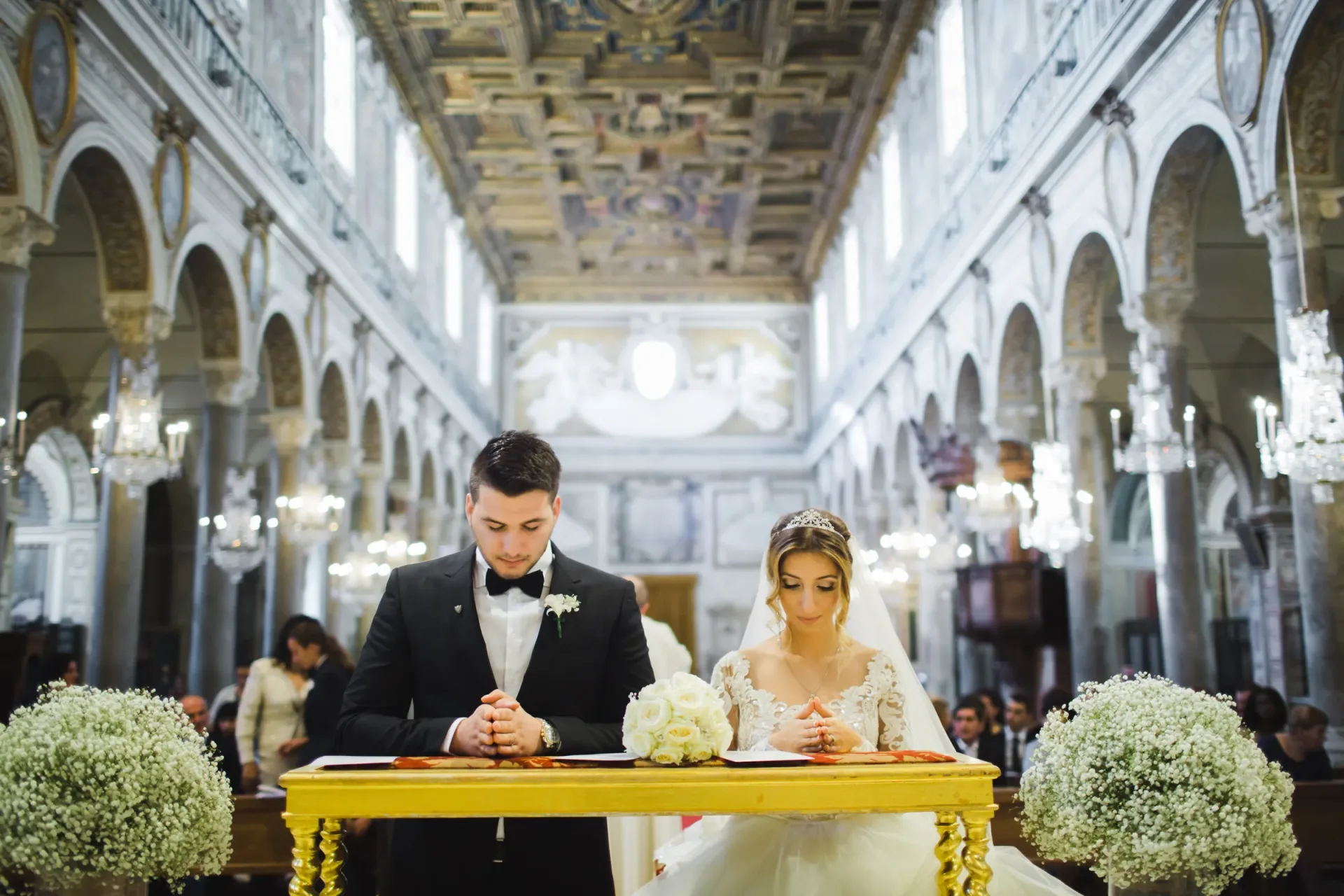
Catholic wedding in Rome: the documents, step by step
The paperwork for a Catholic wedding in Rome is prepared at home, approved at home, and only then reviewed in Rome.
Two principles make the whole process easier to follow.
Your Roman church does not build your file. It starts with your own parish priest.
Timing matters more than speed. Several religious documents expire, so the formal file is completed in the last six months, while the conversation with your priest should start nine to twelve months before. If you are less than five months from the wedding, ask us before you book anything: a Catholic ceremony this year may not be realistic.
Before you start: be legally married at home
For American and most international couples, we recommend completing the civil marriage in your home country first. You then arrive in Rome already legally married, and the Catholic process deals only with the sacrament. This avoids a second, Italian civil procedure with consular declarations and translations on top of the Church file. It does not replace any Catholic step, and your civil marriage certificate becomes one of the documents in the file. Tell your priest about it at the first meeting, because parishes do not all handle a prior civil ceremony the same way.
Step 1 · Choose your church
Know where you want to marry before the formal paperwork begins. Each Roman church sets its own rules for reservations, ceremony times, priests, music, flowers, photography and document deadlines. Some monumental churches, such as Santa Maria in Aracoeli, also issue a short form for your home parish priest to sign, confirming they know you will marry there.
Step 2 · Talk to your parish priest
Tell your priest you want a Catholic wedding in Rome and bring:
- your proposed date and, if chosen, the Roman church;
- where you currently live;
- whether both of you are Catholic;
- any previous marriage, for either of you;
- details of your civil marriage, if you have already had one or plan to.
Your priest will explain how your parish and diocese work. The exact list varies by country and diocese.
Step 3 · Marriage preparation
Most couples take a Catholic marriage preparation course first, called Pre-Cana in the United States. It covers the meaning of the sacrament and married life, not just paperwork, and you can do it well before the formal file.
Step 4 · The prenuptial investigation
Your priest then completes the formal prenuptial investigation, confirming that you both understand Christian marriage and are free to marry. For a wedding in Rome it is normally started within the last six months, because some of the documents in it have limited validity.
Step 5 · Sacramental records
- A recent baptism certificate issued for marriage purposes, requested from the parish where you were baptized. In Italian, certificato di battesimo ad uso matrimonio. The copy your family has at home will not do, because a fresh certificate shows any later annotations. Ask your priest when to request it, not too early.
- Proof of Confirmation, sometimes noted on the baptism certificate, sometimes a separate record. If one of you was not confirmed, talk to your priest rather than assuming the wedding cannot happen.
Step 6 · Freedom to marry, and special situations
- A previous marriage for either of you needs to be reviewed separately. Depending on the case, the Church may need a death certificate, a declaration of nullity or other documents. Raise it at the very first meeting.
- A Catholic and a baptized non-Catholic need permission for a mixed marriage.
- A Catholic and a non-baptized partner need a dispensation from disparity of cult.
All of these can usually be handled. They simply take time, which is why they belong at the start, not at the end.
Step 7 · Approval by your diocese
Once the file is complete, your home diocese reviews it and authorizes the wedding to take place in Rome. You may hear this called diocesan approval, ecclesiastical permission or nulla osta.
Step 8 · The Rome route
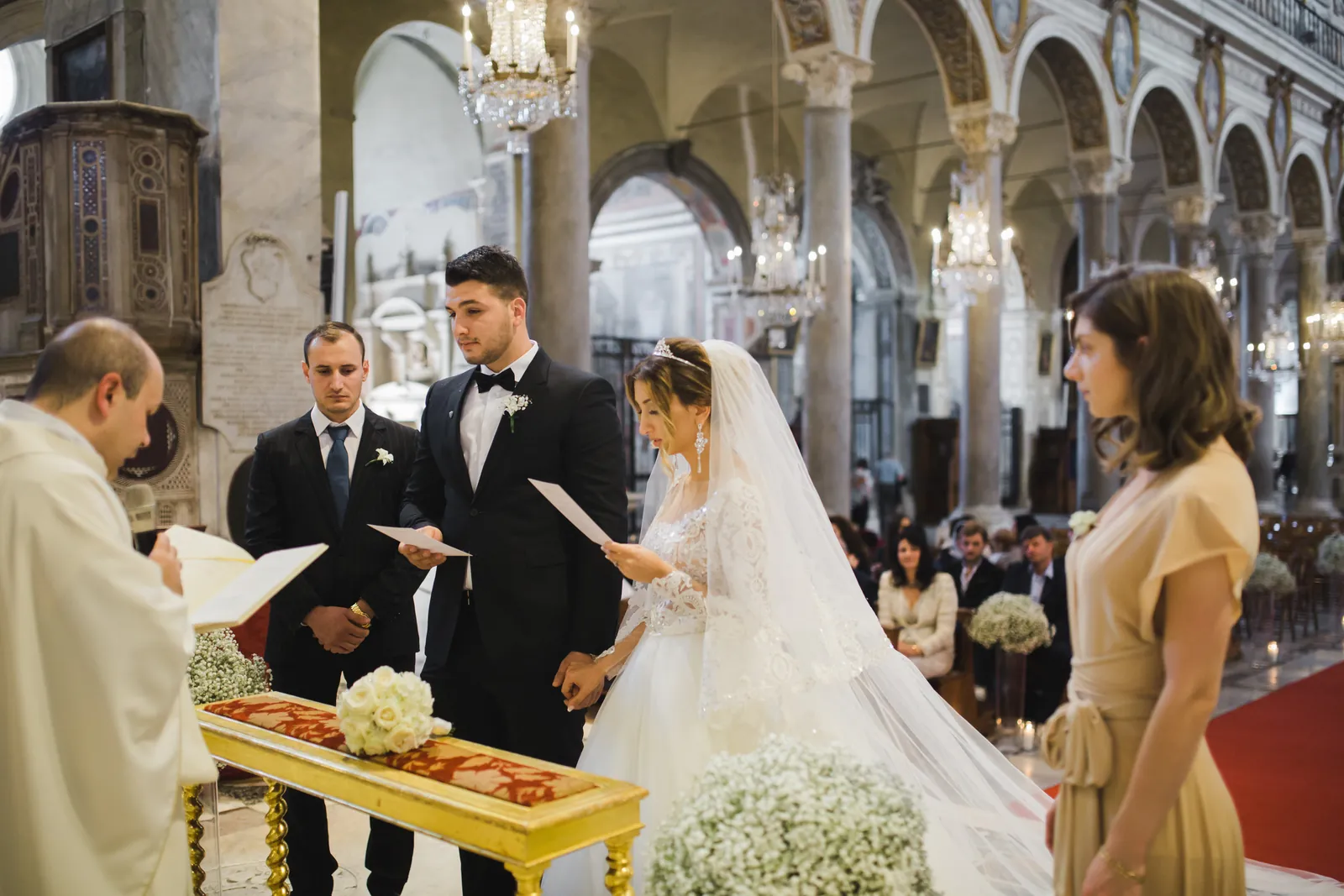
The approved file does not go straight to your church. It goes to the Marriage Office of the Vicariate of Rome, which reviews it and issues the final authorization, known as Modello XIV or Documento Quattordici. That document must then reach your church before the ceremony; each church sets its own deadline. Follow your parish's instructions on how the file travels, and never send original documents to Rome yourself.
Who does what
| Office | Its role |
|---|---|
| Your home parish | Prepares you for marriage and builds the file |
| Your home diocese | Approves the file for a wedding outside the diocese |
| The Vicariate of Rome | Reviews the file and issues Modello XIV |
| Your church in Rome | Hosts the ceremony and sets its own practical rules |
The timeline, with the checklist
| When | What to do |
|---|---|
| 12–18 months before | Choose your date and church; complete or plan the civil marriage at home; first contact with your priest |
| 9–12 months before | Marriage preparation; raise any special situation: mixed faith, no Confirmation, previous marriage, existing civil marriage |
| About 6 months before | Start the prenuptial investigation; request fresh sacramental records; give your parish the civil marriage certificate in the format it asks for |
| 3–4 months before | Diocesan review and approval; confirm how the file will reach Rome |
| Final months | Vicariate review; fix anything missing straight away |
| Final weeks | Modello XIV reaches your church; confirm priest, music, readings, photographer, florist and timing |
A typical file for a couple already married at home: civil marriage certificate, recent baptism certificates, proof of Confirmation, proof of marriage preparation, the prenuptial investigation, proof of freedom to marry where needed, any mixed-marriage permission or dispensation, diocesan authorization, any church-specific form, and the final Roman authorization. Your parish confirms the exact list.
Religious nulla osta and civil nulla osta are not the same
The Church uses nulla osta for its authorization inside the Catholic file. Italian civil and consular offices use similar words for documents about your legal capacity to marry. They are separate procedures, and if you arrive already legally married you need only the first.
The mistakes we see most often
- Collecting documents too early, so they expire before the wedding.
- Assuming the Roman church prepares everything. It does not; the file starts at home.
- Treating religious and civil paperwork as one process.
- Sending documents directly to the Roman church instead of through your diocese and the Vicariate.
- Disclosing a previous marriage or a mixed-faith situation late, when it needs the most time.
What we do, and what we do not
Your priest and diocese remain responsible for your preparation and the Church's approval, and no planner replaces them. Our job in Rome is everything that connects that process to your wedding: speaking to the church in Italian, confirming its deadlines and rules, following the Roman side of the file, checking the final document has arrived, and building the ceremony into the rest of the day. Marina and Katerina went through this route themselves for their own church weddings, in Sicily and on Lake Como, which is why we explain it from the couple's side as well as the planner's.
For how the ceremony fits into your wedding day, see Catholic Wedding in Rome →. To choose a church, see Aracoeli and Santa Maria in Trastevere →.
Questions couples ask
Ask your ownDoes being legally married at home replace the Catholic paperwork?
No. It simplifies the Italian side only.
When should we start?
Talk to your priest nine to twelve months before. The formal file is completed within the last six months.
Do our documents go straight to the church in Rome?
No. Parish, diocese, Vicariate, then church.
Can divorced people have a Catholic wedding in Rome?
A previous marriage has to be reviewed by the Church first, and the route depends on the circumstances.
What is Modello XIV?
The final authorization issued through the Vicariate of Rome, which your church needs before the ceremony.
Planning a Catholic wedding in Rome?
Marina, who founded WOWITALY, answers every inquiry herself. The first video call is with Katerina, it costs nothing, and it is not a sales call.
Tell us your preferred church, your date and roughly how many guests, and the first call will tell you honestly whether the timeline works.
hello@wowitaly-weddings.com · +39 334 840 2086